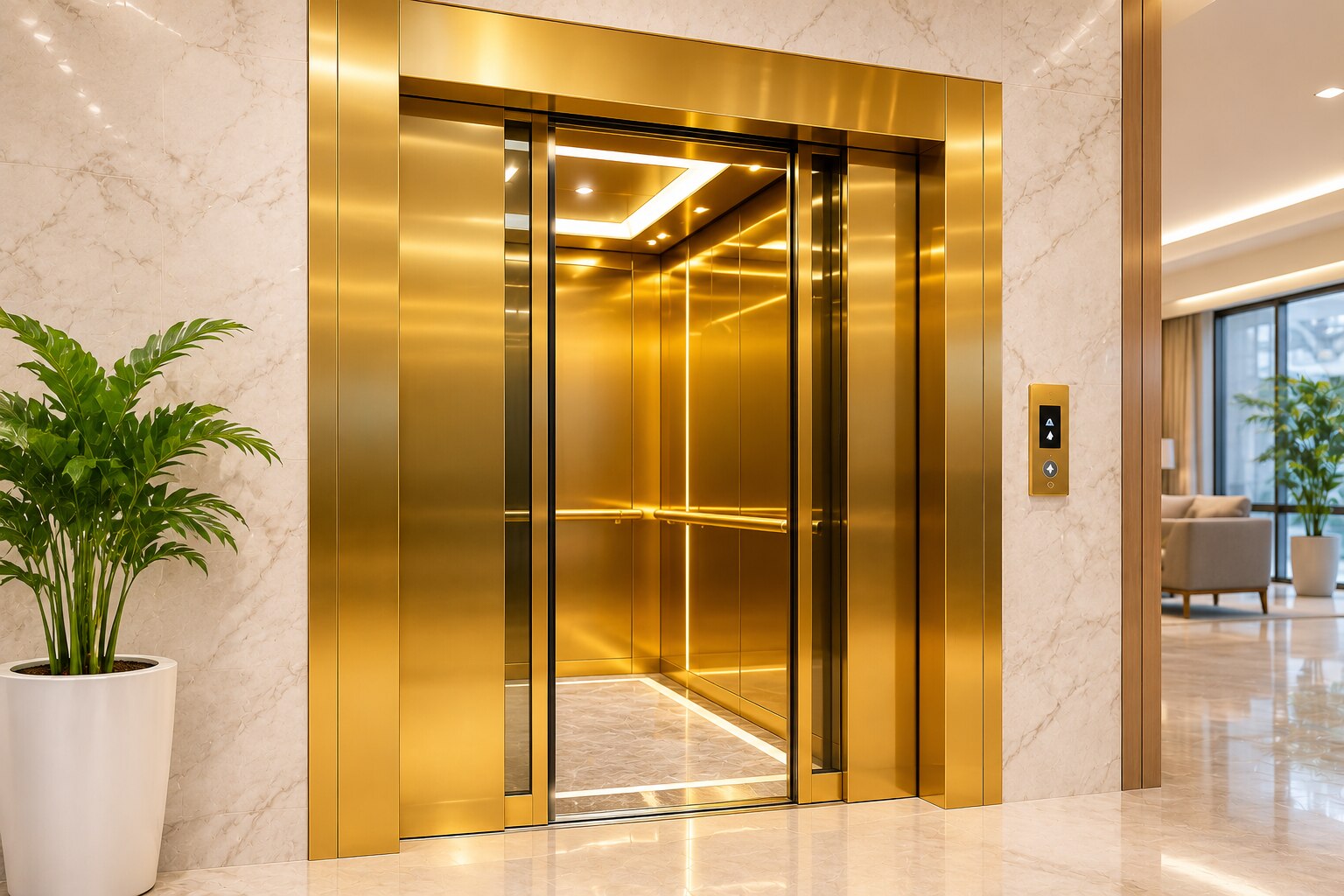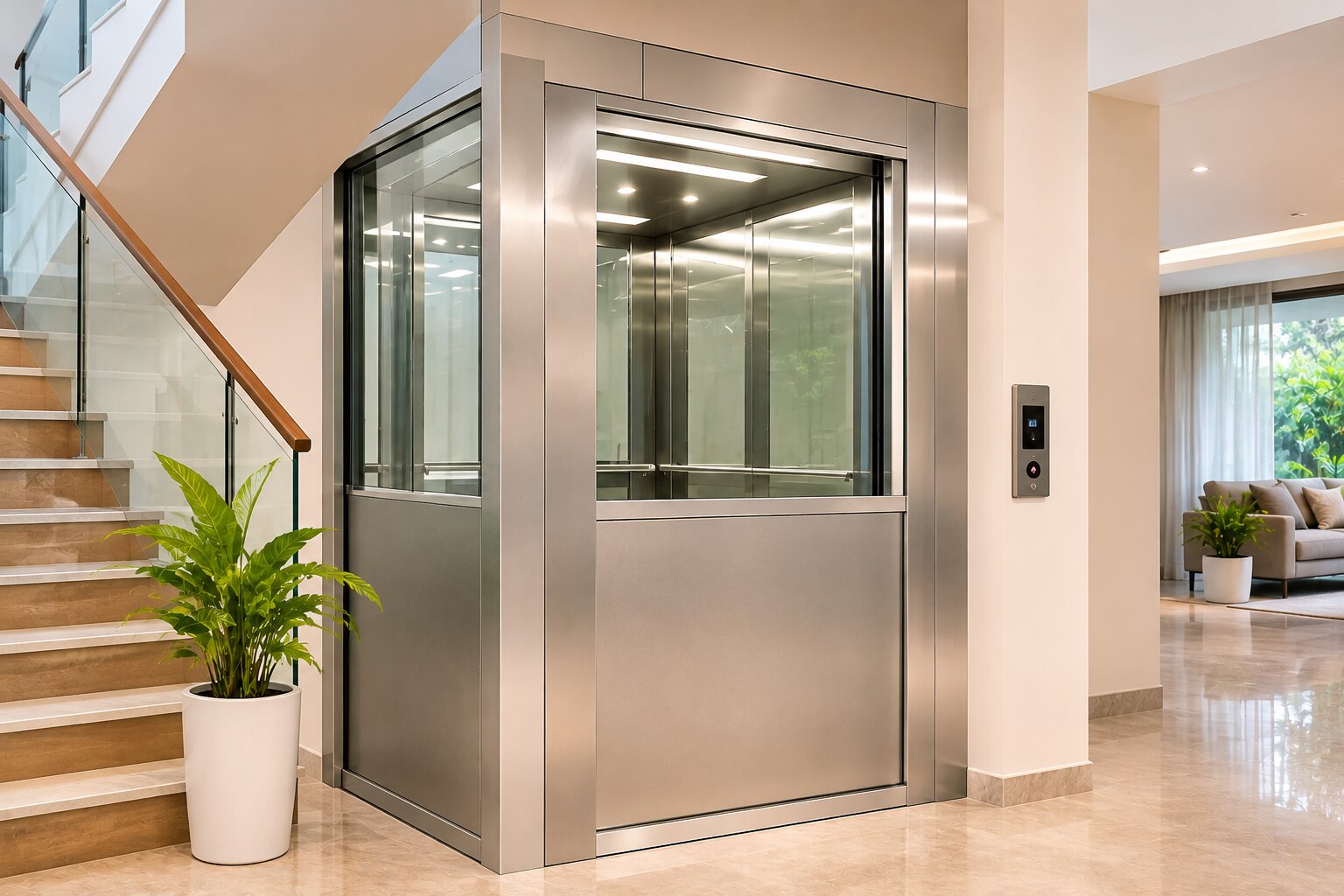
A half-glass cabin makes damage, dirt, water entry, and passenger misuse easier to see, but it does not reduce the safety work required inside the lift system. By the end, you will have a practical inspection schedule, safe cleaning method, local-condition triggers, shutdown rules, and a way to judge whether a service provider is documenting the work properly.
Key takeaways
- Use daily reports, monthly checks, and scheduled technician inspections.
- Clean glass with non-abrasive products; protect seals, sensors, and door equipment.
- Increase checks during Surat’s dusty, humid, hot, and monsoon conditions.
- Shut down the lift for broken glass, abnormal movement, or door faults.
Build a maintenance schedule around the cabin and the lift system
Use three inspection layers for half glass lift maintenance: daily reporting by building staff, monthly housekeeping checks, and scheduled work by a qualified lift technician.
- Daily staff check: report unusual vibration, scraping sounds, uneven stopping, delayed or repeated door movement, door reopening, flickering cabin lights, water marks, cracked or chipped glass, loose trim, burnt smells, and repeated fault resets. Do not keep resetting a recurring fault.
- Monthly housekeeping check: clean and inspect door tracks, sills, handrails, cabin ventilation areas, visible glass edges, gaskets, glazing channels, stainless-steel trim, shaft lighting, and landing-door surfaces. Keep control equipment closed.
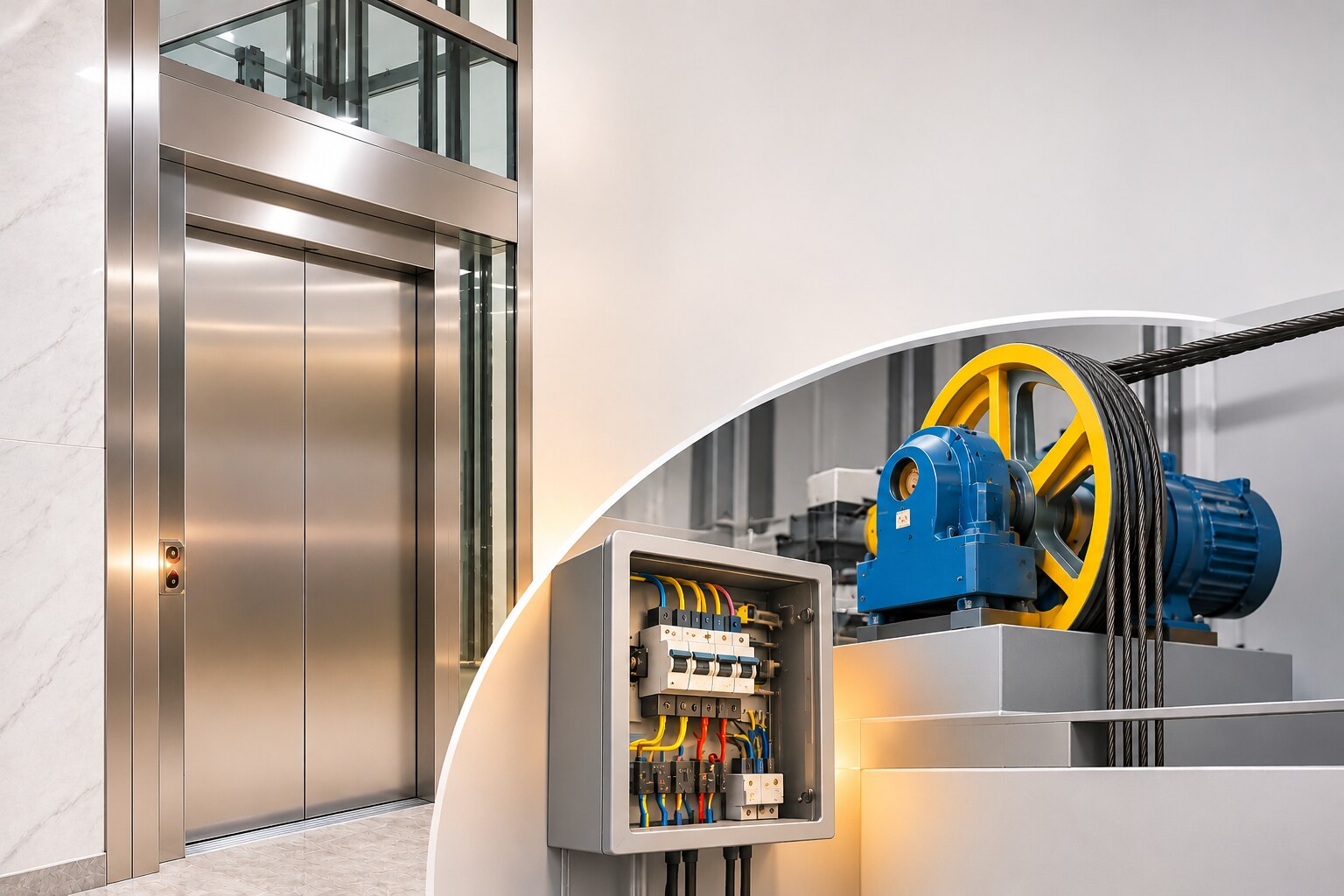
- Technician preventive maintenance: test door rollers, safety edges, landing-door locks and interlocks, guide rails, ropes or belts, traction machinery, brakes, controller functions, alarm, emergency communication, emergency lowering or automatic rescue device, overspeed governor, buffers, safety gear, levelling accuracy, and the complete safety circuit.
Record the lift model, controller and drive type, door operator, glass specification, fault history, replaced parts, test results, and next due actions. “Lift serviced” is not a useful maintenance record.
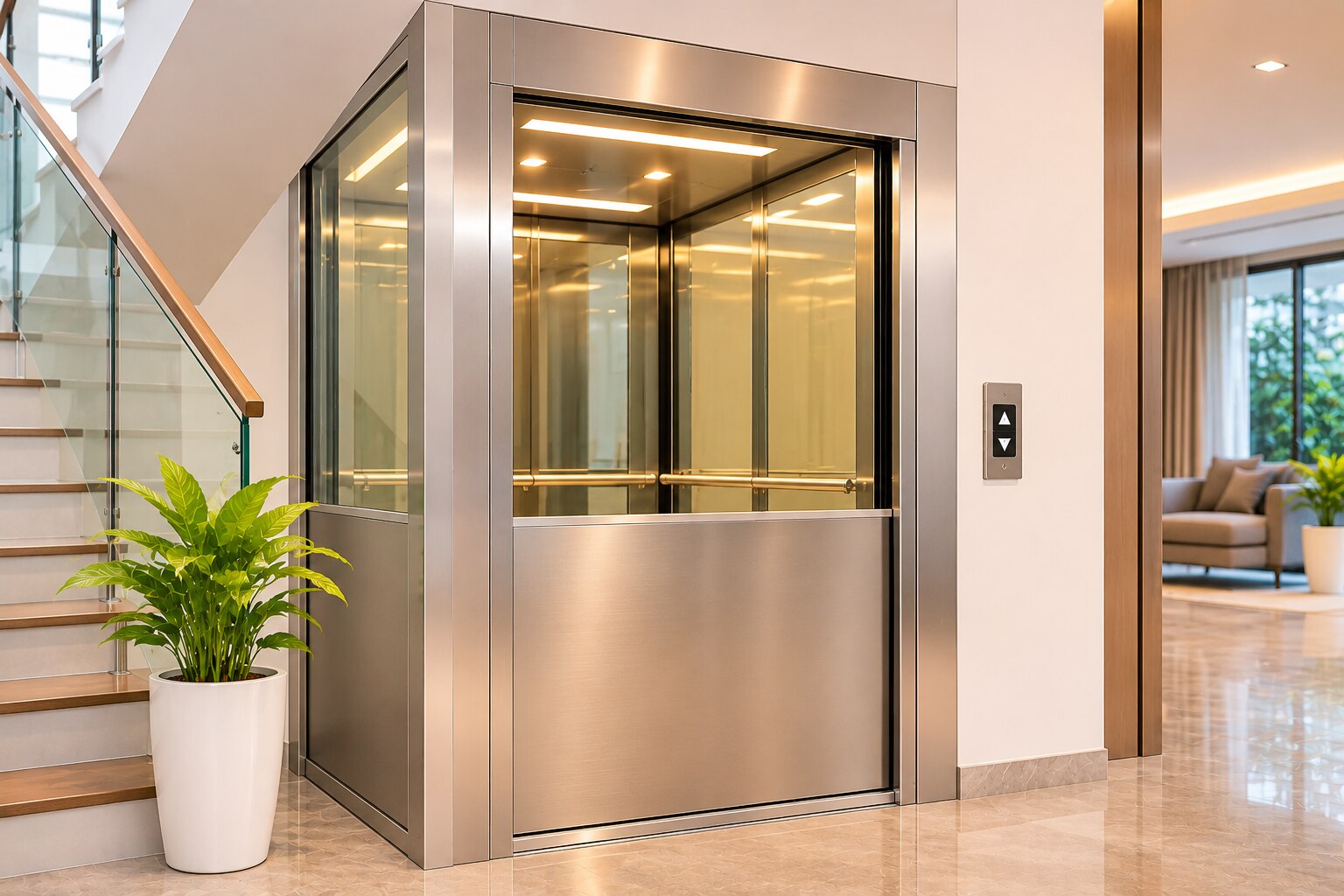
The half-glass cabin supports faster visual pre-inspection: occupants can spot contamination, water entry, damaged fittings, vandalism, or trapped objects sooner. That is the practical half glass cabin lift for maintenance benefits in Surat, not permission to reduce safety checks. A visible design improves reporting; it does not lower the safety obligation.
Clean the glazing without damaging seals, sensors, or door equipment
Use a soft, lint-free microfiber cloth, clean water, and a mild, pH-neutral glass cleaner approved for the installed glass and its protective coating. Apply cleaner to the cloth, never toward panel edges, gaskets, sensors, buttons, door operators, or control components. Wipe stainless-steel trim with the grain, then dry it to prevent water spots.
| Design | Realistic cleaning benefit | Surfaces still requiring attention |
|---|---|---|
| Half-glass cabin | Less glazed area, fewer fingerprints, shorter glass-cleaning time, and easier panel handling | Door glass, handrails, trim, sills, ventilation areas, seals, and fixing points |
| Full-glass cabin | Greater visibility but more glass to clean and handle | All glazing, door equipment, handrails, trim, sills, seals, and ventilation areas |
During half glass lift maintenance, inspect panel edges, clamps, glazing channels, fixing points, sealants, protective films, handrails, and the cabin roof. Cleaning will not correct a loose retention system, damaged gasket, corroded fixing, or trapped object.
Keep liquid out of door tracks, sill grooves, electrical fittings, and cabin controls. Do not use abrasive pads, metal scrapers, powdered cleaners, strong solvents, unapproved ammonia-heavy products, or high-pressure spray. Remove cloudy deposits and stains early; delayed cleaning can make them difficult to reverse.
The strongest glass cabin lift upkeep benefit comes from modular glazing that remains accessible without dismantling major cabin components.
Adjust the inspection plan for Surat’s dust, humidity, heat, and monsoon moisture
Do not wait for the next calendar visit after water, dust, or power events. Use a condition-based inspection when Surat’s weather or nearby work changes the lift environment.
| Event | Inspection response | Check for |
|---|---|---|
| Monsoon rain, seepage, flooding, or prolonged humidity | Inspect promptly and increase visual checks | Water marks, damp thresholds, moisture near landing doors or the cabin roof, corrosion on exposed fasteners, and staining around panel fixings |
| Construction or renovation nearby | Inspect door and guide areas before normal use continues | Fine dust and debris in door tracks, guide areas, sill grooves, and machinery spaces |
| Heat, flickering lights, nuisance trips, or repeated resets | Ask the technician to review fault history and power-related symptoms | Ventilation, cabin lighting, controller, drive, voltage-related faults, and reset records |
Coastal or industrial air can stain and corrode stainless-steel trim, clamps, fasteners, handrails, and door components. Clean contamination promptly, but document corrosion with photographs and location notes instead of polishing over it.
A half-glass cabin makes cracked laminates, loose trims, vandalism, water entry, and trapped debris easier to spot. That visibility supports faster reporting, but it also exposes poor housekeeping. One practical half glass cabin lift for maintenance benefits in surat is quicker visual reporting; it does not remove the need to inspect concealed equipment.
Include these event-triggered checks in a half glass cabin lift service in surat, rather than claiming one interval suits every property. Record the trigger, findings, photographs, corrective action, and next inspection date.
Know which visible faults require shutdown, not cosmetic repair
Stop the lift and call a qualified technician for any fault that could affect containment, movement, stopping, or rescue. This is the essential distinction in cabin lift repair in Surat: a scratched trim piece can wait, but a damaged safety component cannot.
| Fault | Required action | Why it matters |
|---|---|---|
| Cracked or chipped panel, delaminated laminated glass, loose fixing, or damaged door vision panel | Isolate and arrange controlled recovery | Glass or retention can fail during operation |
| Water ingress, failed door lock, abnormal movement, inaccurate stopping, unusual brake noise, or repeated controller faults | Keep passengers out and request technical assessment | Moisture, doors, brakes, and controls can create immediate operating hazards |
| Failed alarm or two-way communication, or a lift stopped between floors | Isolate the lift and manage passenger recovery through trained personnel | Visibility through glass is not emergency communication |
| Scratched nonstructural trim with no affected retention, door, electrical, or safety component | Schedule cosmetic repair | The defect does not alter safe operation |
Keep people away from the lift and never patch structural glass, permanently prop a loose panel, bypass an interlock, or repeatedly reset a recurring fault because the lift moves again. Cleaning cannot compensate for failed door interlocks, brakes, overspeed protection, alarms, buffers, safety gear, or automatic rescue equipment.
For half glass lift maintenance, replacement glass must match the approved tempered or laminated type, thickness, dimensions, edge treatment, and fixing method. Ordinary architectural glass is not an acceptable substitute. Before return to service, require assessment of the cabin structure, door system, safety circuit, and affected equipment.
Compare service providers by records, parts planning, and response capability
Choose a provider that can prove what was inspected, what was replaced, and how quickly a damaged panel will be secured. For a half glass cabin lift service in Surat, request these items before signing:
- The preventive-maintenance checklist and technician qualifications.
- The escalation process and emergency response arrangement.
- Approved glass-cleaning products and the procedure for isolating cracked, chipped, delaminated, or loose panels.
- The glass type, panel weight, thickness, dimensions, edge treatment, fixing method, door operator, controller, drive, safety-circuit results, fault history, replaced parts, and next actions in every service record.
- The panel replacement method, required access or lifting equipment, and spare-panel lead time.
| Provider | Records and parts planning | Response evidence |
|---|---|---|
| Provider with traceable reports | Identifies every lift and glass specification; lists faults, parts, tests, and next actions | Gives written escalation times and planned spare-panel arrangements |
| Provider with modular repair capability | Confirms whether a panel can be changed without dismantling major cabin components | Explains isolation, passenger recovery, access equipment, and downtime |
| Provider using generic stickers | Records only “lift serviced” | Cannot demonstrate completed tests or a credible repair timeline |
Compare evidence of door-interlock, brake and traction, rope or belt, overspeed-governor, leveling, alarm, emergency lowering or automatic rescue, shaft-lighting, buffer, and safety-gear checks—not a sticker. Shivangi Enterprises can be compared with other qualified providers for cabin lift repair in Surat using these same records.
The strongest half-glass benefit is modular, accessible glazing paired with prompt reporting and traceable technical work.
Related product
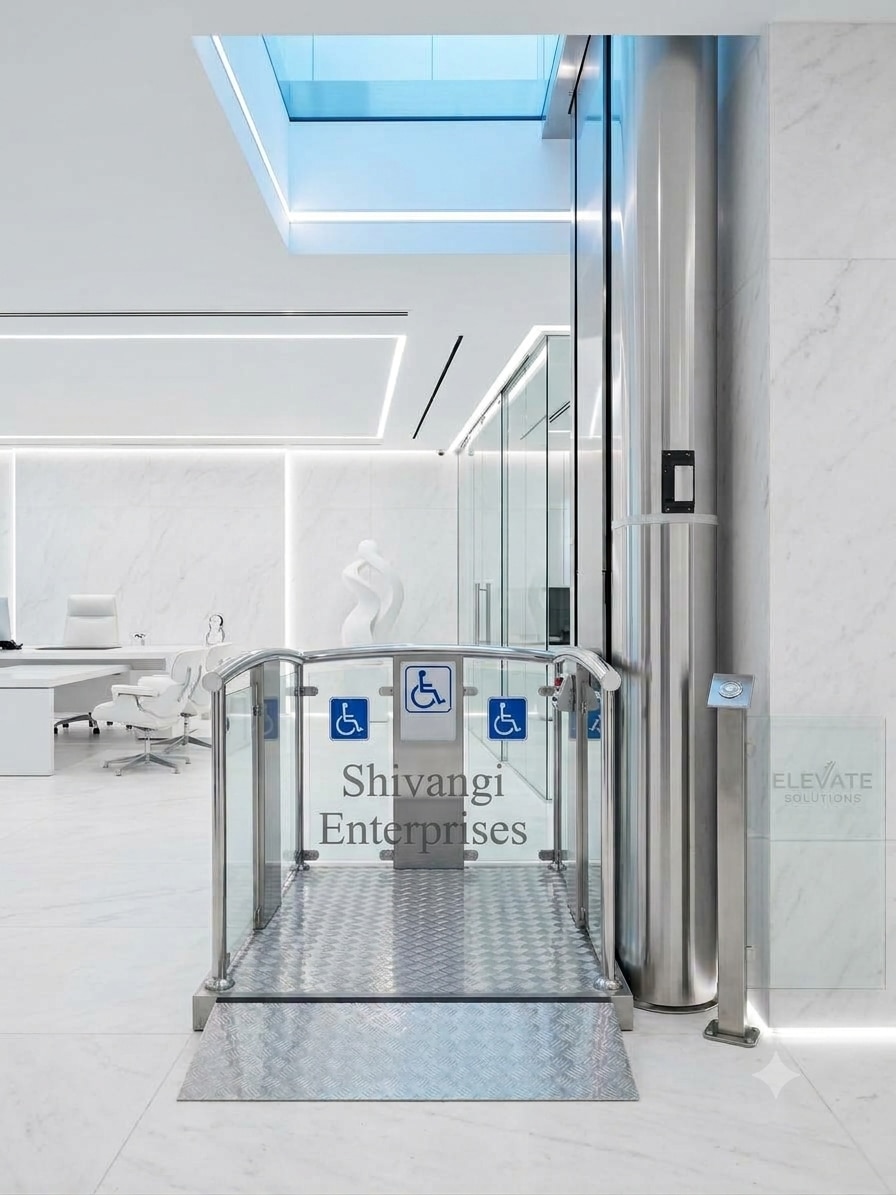 | Half Glass Cabin Lift Shivangi Enterprises – Premium Half Glass Cabin Elevators Product Overview Elevate the aesthetic appeal of your modern architecture with Shivangi... View product → |
Frequently asked questions
How often should a half glass cabin lift be inspected?
Use three inspection layers: daily reporting by building staff, monthly housekeeping checks, and scheduled work by a qualified lift technician.
How do you clean a half glass lift without causing damage?
Use a soft cloth and a compatible glass cleaner, keep liquid away from sensors and door equipment, and avoid abrasive pads that scratch glazing or seals.
Why does Surat’s climate affect half glass lift maintenance?
Dust can affect door tracks and sensors, while humidity, heat, and monsoon moisture increase the need to check seals, electrical areas, corrosion, and water ingress.
Which half glass cabin lift faults require shutdown?
Shut down the lift for cracked or loose glass, uncontrolled movement, repeated levelling errors, doors that fail to lock, unusual noise, burning smells, or exposed wiring.
How should you compare half glass cabin lift service providers in Surat?
Check inspection records, planned replacement parts, technician qualifications, emergency response arrangements, and their ability to support the installed lift system.
Keywords