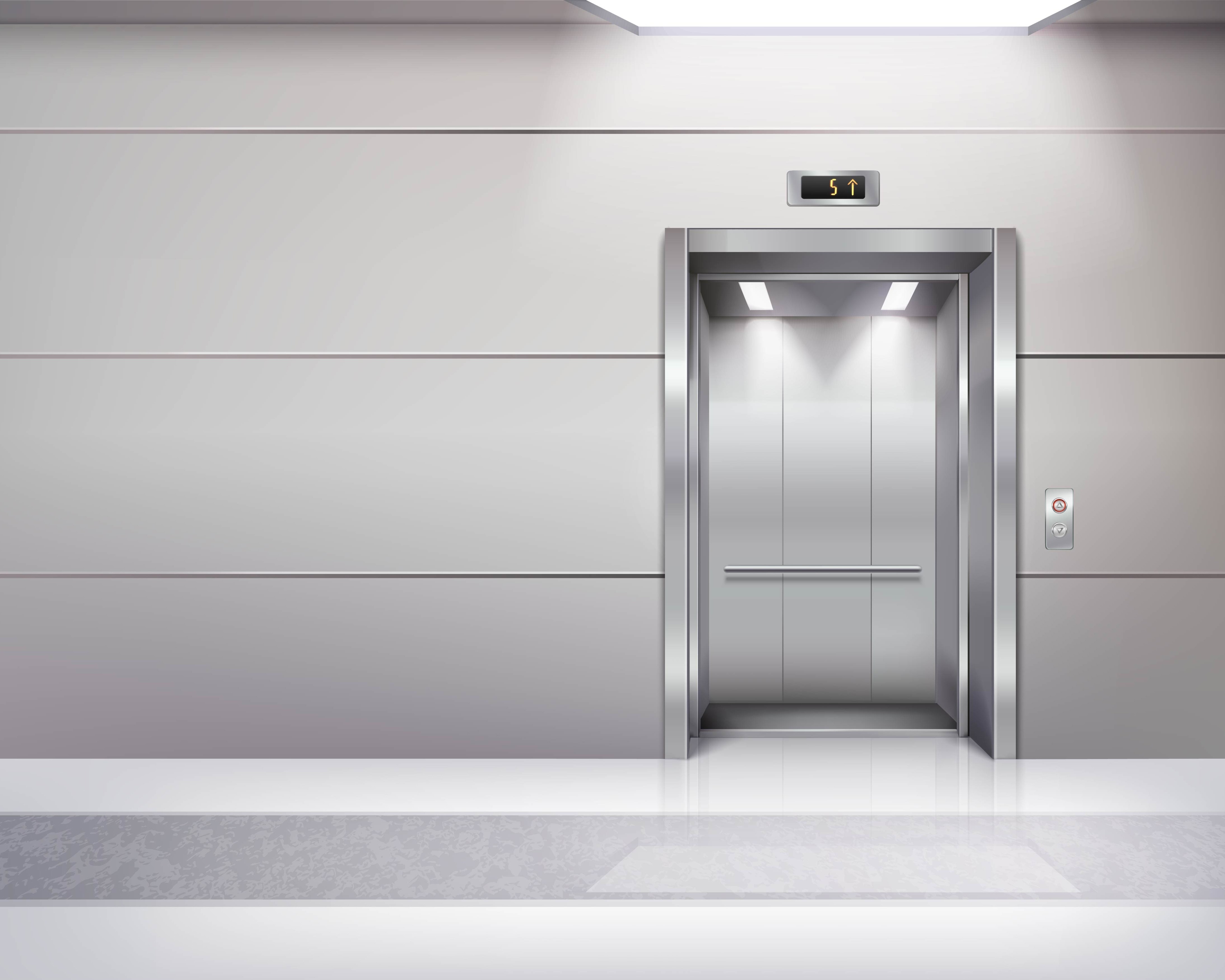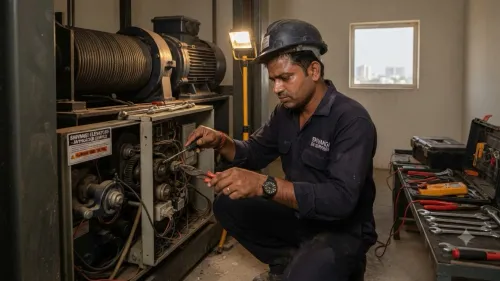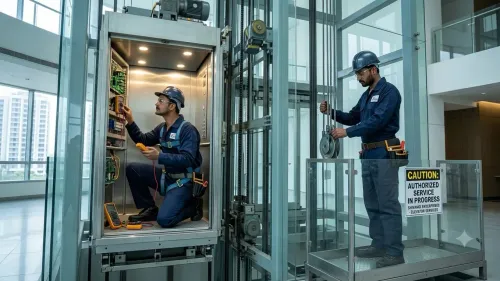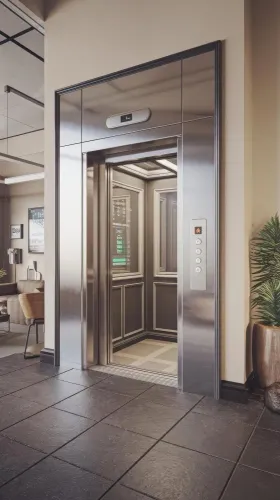
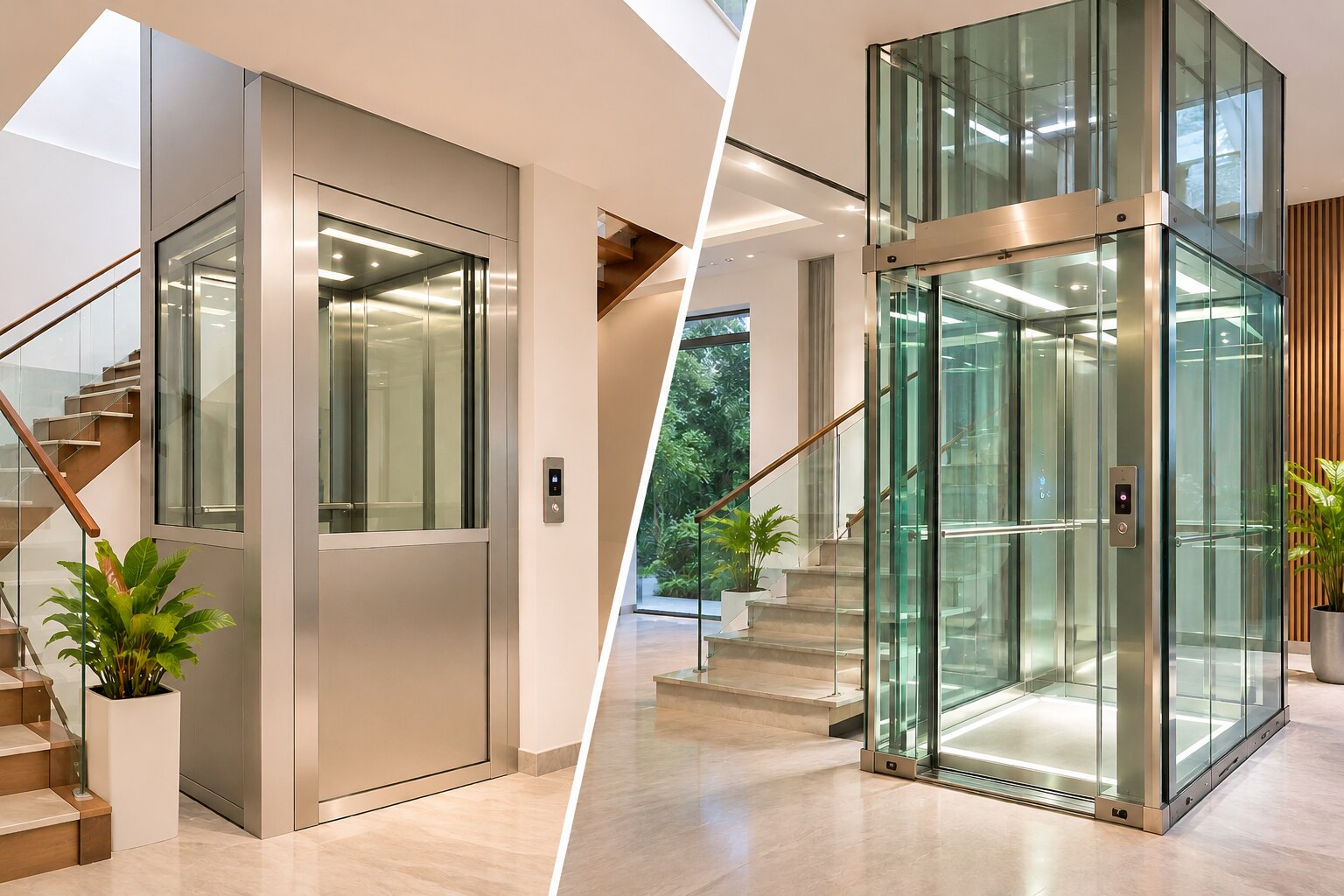
The choice is not only between a solid cabin and a transparent one. You need to compare privacy, heat, glare, cleaning, shaft position, safety equipment, structural requirements, and the long-term cost of owning each design before approving the villa layout.
Key takeaways
- Choose half glass for greater privacy and lower cabin heat.
- Choose full glass when visibility and architectural impact matter most.
- Compare glazing, ventilation, lighting, and cabin safety—not appearance alone.
- Demand safety documents, load details, warranty terms, and maintenance plans before ordering.
What Half Glass and Full Glass Mean in a Lift Cabin
A half-glass cabin has solid metal panels combined with one or more glazed panels; a full-glass lift has glazing across most or all visible cabin sides. That is the actual difference—not the motor, speed, capacity, or lift mechanism.
| Option | Cabin construction | Visibility |
|---|---|---|
| Half-glass cabin | Solid metal walls with a fixed window, viewing panel, or glazed door | A controlled view from selected sides; less exposure from outside |
| Full-glass cabin | Glass walls on most or all visible sides, sometimes with a glass door or roof | Broad panoramic views into and out of the cabin |
“Half glass” does not identify one standard layout. The glass might occupy one side, a vertical feature panel, the door, or part of two walls, while the remaining surfaces stay opaque. Confirm the drawing before ordering, because a narrow window and a full-height observation panel create very different results.
“Full glass” also needs a precise description. Ask whether it includes glass walls, a glass door, a glass roof, or only panoramic viewing panels. A full-glass cabin can run inside a conventional masonry or framed shaft; a glass shaft is a separate structural and architectural package.
For a half glass cabin lift or full glass lift in Surat, compare the cabin drawings rather than the labels. A glass cabin elevator for residential buildings still needs separate specifications for rated load, speed, stops, drive type, shaft construction, fire performance, and applicable lift code.
Privacy, Heat, Visibility, and Cleaning: The Practical Trade-Off
A half-glass cabin usually gives you a solid privacy zone, while a full-glass lift exposes occupants to views from neighbouring homes, the road, or an internal courtyard. That difference matters every time the lift stops at a bedroom floor, not only when guests visit.
| Option | Privacy and visibility | Heat, glare, and cleaning |
|---|---|---|
| Half-glass cabin | Limits outside views below or beside the glazed panel; provides a controlled observation area | Less exposed glazing means lower solar gain and fewer fingerprints; clean the glass panel and interior finishes |
| Full-glass cabin | Offers broad views through most cabin sides; visibility works from inside and outside | More daylight and glare; more glass faces, seals, tracks, and edges require regular cleaning and inspection |
| Full-glass cabin with glass door or roof | Creates the most open appearance, but exposes occupants and equipment to additional sightlines | Adds cleaning surfaces and requires confirmation of safe access for roof and external faces |
A full glass lift for home does not automatically need a glass shaft. It can run inside a masonry or framed shaft, while a glazed shaft adds framing, weather sealing, drainage, fire separation, and cleaning-access work.
Before selecting a half glass cabin lift or full glass lift in Surat, ask how technicians will clean external panes, inspect gaskets and fixings, replace a cracked panel, and reach cabin-top equipment without improvised ladders. Compare those tasks in the maintenance quotation, not only the cabin price.
A full-glass option also deserves a solar-control glass specification; clear glass beside west-facing glazing can turn a short ride into a hot, glaring one.
Which Villa Layout Suits a Half-Glass Cabin Lift?
A half-glass cabin lift for a villa is the better architectural fit when you want one controlled view without turning the lift into a transparent room. It suits an internal shaft beside a staircase, a foyer, or a feature wall where passengers need orientation but neighbouring homes should not see directly inside.
| Villa condition | Half-glass cabin advantage | Full-glass drawback |
|---|---|---|
| Shaft faces a street or adjoining plot | Limits outside visibility | Exposes occupants and interior activity |
| Lift sits beside a staircase or wall | Complements a solid feature surface | May compete with the staircase design |
| Compact floor plan | Requires less visual coordination around the shaft | Makes every surrounding finish part of the composition |
| External shaft | Reduces glare, heat, and cleaning exposure | Adds more glass to maintain and protect |
Choose the half-glass design when the lift entrance is near bedrooms, a private lounge, or a boundary-facing window. It also works well in a low- or mid-rise villa where the lift is a practical connector rather than the main architectural feature.
- Select a viewing panel facing the garden, courtyard, or stairwell instead of the road.
- Freeze the shaft opening, pit, overhead, sill support, and guide-rail brackets before ordering finishes.
- Compare villa lift options in Surat by travel, stops, traffic, rescue arrangement, energy use, and available pit space; the drive system is independent of the cabin glazing.
A half-glass cabin lift for villa projects also makes sense when you want lower lifecycle exposure to replacement glass, cleaning access, and solar heat than a fully glazed cabin.
Safety Specifications and Documents to Demand Before Ordering
Choose the lift only after the supplier’s safety file matches your villa, shaft, travel, and actual cabin weight. A glass cabin elevator for residential buildings is not safer because it looks transparent; glazing, drive equipment, doors, and rescue systems must work as one tested installation.
1. Demand a general-arrangement drawing showing shaft width, pit depth, overhead, landing doors, machine location, guide rails, access points, and structural reactions. Require a separate cabin-weight calculation covering laminated glass, framing, handrails, finishes, counterweight, motor, brake, ropes, and stopping distance.
2. Check the specification for door interlocks, a light curtain or safety edge, overspeed governor, safety gear, buffers, emergency alarm, two-way communication, emergency lighting, overload protection, automatic rescue device, and a clearly described manual rescue procedure.
Confirm whether the full glass lift for home has a glass door, roof, or shaft; each changes cleaning, fire separation, drainage, and structural details.
3. Request glazing documents naming glass type, thickness, laminate, edge protection, impact performance, replacement method, and fixing details. Reject “toughened glass” alone as a specification; toughened glass can shatter without the retention provided by suitable laminated construction.
4. Obtain factory and commissioning test records for brake operation, door safety, overspeed protection, emergency lowering, load testing, insulation resistance, earthing, and alarm communication. Shivangi Enterprises should identify which tests it performs and which an independent inspector witnesses.
5. Before paying, get the authority’s name, inspection route, registration requirement, electrical-safety approval, maintenance log format, periodic inspection interval, and applicable Gujarat or local rules in writing. A private villa still requires verification of statutory compliance.
Related products
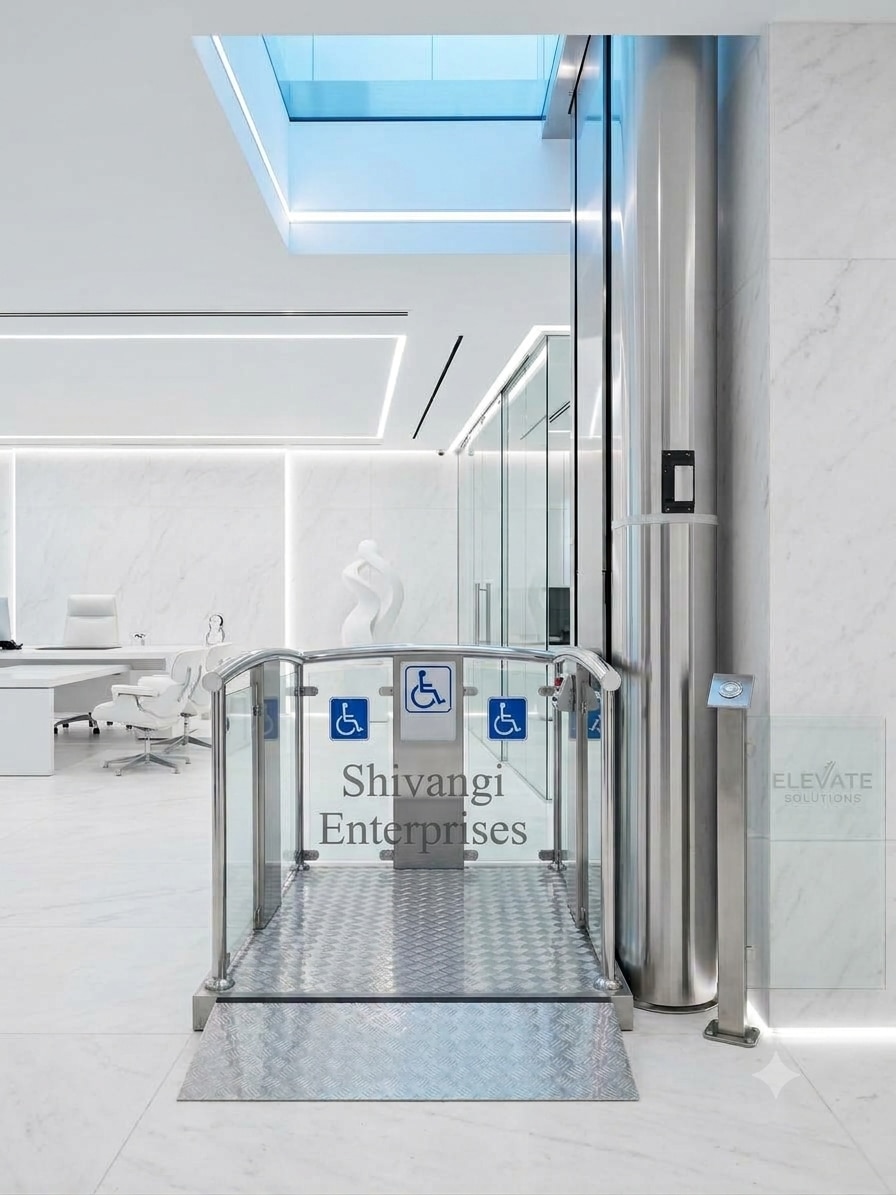 | Half Glass Cabin Lift Shivangi Enterprises – Premium Half Glass Cabin Elevators Product Overview Elevate the aesthetic appeal of your modern architecture with Shivangi... View product → |
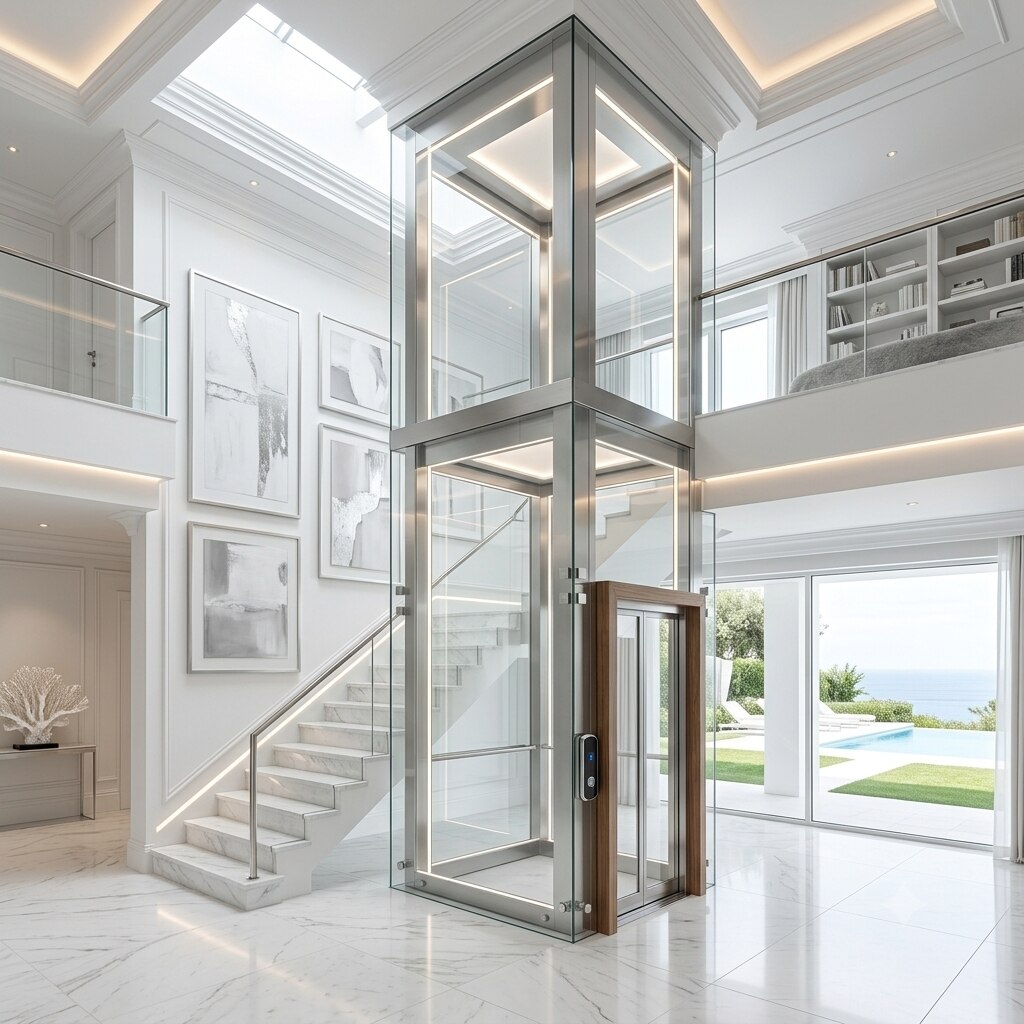 | Glass Elevator 🌟 Premium Glass Elevators (Panoramic Elevators) At Shivangi Enterprises, based in Surat, Gujarat, we design and manufacture world-class Glass... View product → |
Surat Site Conditions and the Final Choice for Your Home
For most Surat villas, a half glass cabin lift for villa is the safer default when the shaft faces west, a neighbouring property, or an open terrace. It limits solar gain, glare, heat, and unwanted views while retaining daylight.
Choose a full glass lift for home when panoramic visibility is the architectural priority and you accept greater cleaning and replacement costs.
| Factor | Half-glass cabin | Full-glass cabin |
|---|---|---|
| Climate | Cooler, less glare, simpler solar control | More solar gain; needs shading, solar-control glass or film, ventilation, and condensation control |
| Shaft location | Better for external, street-facing, or sun-exposed shafts | Best in shaded internal shafts or carefully screened locations |
| Privacy | Solid panels shield occupants from neighbours | Continuous visibility from inside and outside |
| Ownership cost | Lower glazing, cleaning, and future replacement exposure | Higher glazing, framing, access, cleaning, and modernisation costs |
A full-glass cabin does not require a glass shaft. A masonry or framed shaft avoids extra structural framing, weather sealing, drainage, fire separation, and cleaning-access work.
Keep the drive system separate from the appearance decision. Verify whether the site suits:
- A machine-room-less traction system
- Geared or gearless traction
- A hydraulic system
Match that choice to travel, traffic, pit and overhead space, energy use, and rescue arrangements. Before ordering, obtain the authority’s approval, inspection, registration, electrical-safety, and periodic-maintenance requirements for the exact Surat site. Choose the full-glass option only after pricing replacement glass, preventive maintenance, cleaning access, and future modernisation.
Frequently asked questions
What is the difference between a half-glass and full-glass lift cabin?
A half-glass cabin combines solid metal panels with one or more glazed panels. A full-glass lift uses glazing across most or all visible cabin sides.
Which lift cabin offers more privacy in a villa?
A half-glass cabin offers more privacy because solid panels block views into and out of the cabin.
Is a full-glass lift suitable for every villa layout?
No. Choose it when the shaft, landing approach, internal sightlines, and villa design benefit from visibility. Use half glass where bedrooms, bathrooms, or close neighbouring properties face the lift.
What safety documents should you request before ordering a villa lift?
Request the cabin and door specifications, rated load and speed, electrical and emergency systems, installation drawings, test records, warranty terms, and a written maintenance plan.
How do Surat site conditions affect the choice between half glass and full glass?
Review direct sunlight, heat buildup, dust, monsoon moisture, ventilation, cleaning access, and the lift shaft’s exposure before selecting the cabin design.
Keywords