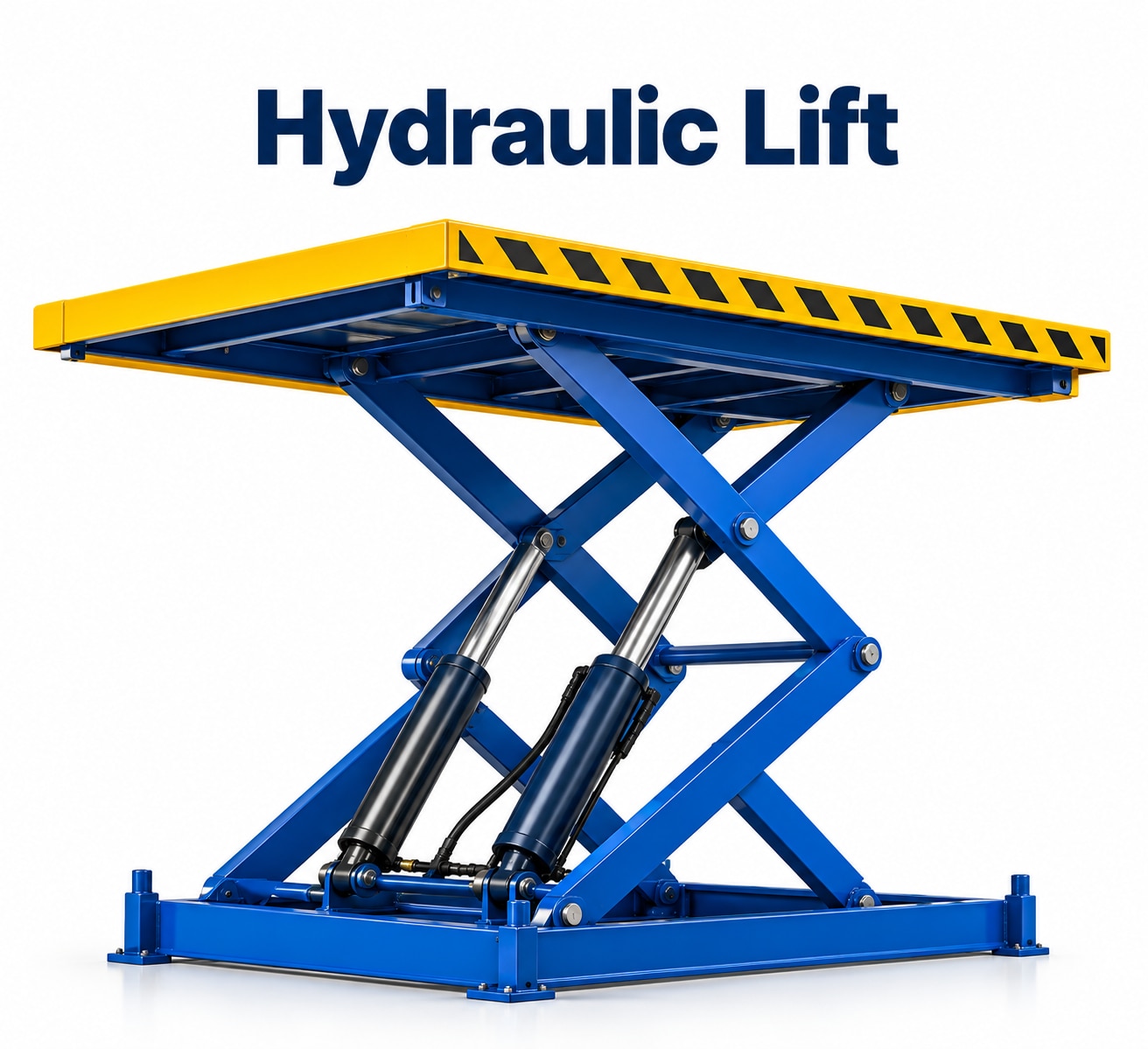
Choosing a hydraulic lift in Surat requires more than comparing rated load and quoted price. By the end, you will be able to match the system to your building or industrial duty, challenge incomplete quotations, and define installation, testing and maintenance responsibilities before signing an order.
Key takeaways
- Choose hydraulics for short travel, modest speed and limited daily starts.
- Demand load, travel, speed, pit, headroom and power details in the quotation.
- Plan the shaft, pit, machine location and electrical supply before installation.
- Record testing, maintenance duties and Gujarat handover documents before acceptance.
When a hydraulic lift is the right choice for your site
Choose a hydraulic lift for a low- to mid-rise building with short travel, modest speed, light-to-moderate traffic and limited daily starts. It suits low-rise offices, clinics, hotels, apartment buildings, warehouses, workshops, parking facilities and factories where the lift carries people, goods or vehicles on defined routes.
| Option | Best site fit | Main trade-off | Compare when |
|---|---|---|---|
| Hydraulic | Short travel, lower traffic, low- to mid-rise buildings | Uses pump power upward; heat and oil maintenance affect performance | Travel is short and installation simplicity matters |
| Traction | Taller buildings, greater speed, heavy traffic and frequent trips | Requires traction machinery, ropes and counterweight planning | The lift will make many daily journeys or serve several floors |
Hydraulic elevators in Surat need a quotation that states maximum travel, rated speed, starts per hour and duty cycle. A direct-acting system needs cylinder travel broadly comparable to car travel; a roped-hydraulic system reduces cylinder travel but adds sheaves, ropes and maintenance points.
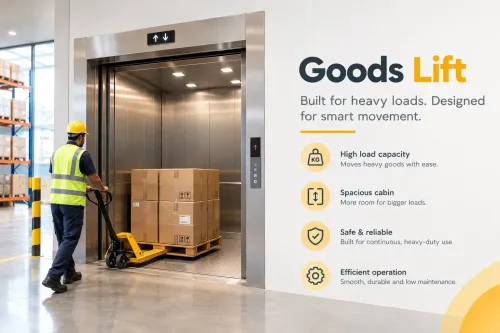
Select hydraulic equipment for goods and automobile duty only after checking concentrated wheel loads, loading impacts, car-floor strength, entrance protection and door operation. A nominal load rating alone does not describe that service.
Compare traction before choosing hydraulic equipment for a tall building, fast service, heavy passenger traffic or continuous industrial use. Hydraulic systems consume less motor energy during descent, but prolonged traffic can heat the oil; an unventilated pump room can cause slow levelling, extended acceleration or thermal shutdown.
The specifications a hydraulic lift quotation must show
“ISI compliant” is not a comparable specification. Ask hydraulic lift manufacturers in surat to name the governing code and edition—such as the National Building Code of India, a specified BIS standard, EN 81-20/50 or ASME A17.1/CSA B44—and use one primary code for inspection and handover.
| Specification | What the quotation must state | Why it separates offers |
|---|---|---|
| Rated load and usable load | Kilograms, car-floor area, clear door width, internal height and loading method | A 2,000 kg rating does not prove the floor suits pallets, vehicles or hospital beds |
| Speed and travel | Rated speed, total travel, number of stops, floor-to-floor dimensions and levelling accuracy | Faster travel and tighter levelling affect valves, motor size and price |
| Hydraulic arrangement | Direct or roped system, jack location, cylinder diameter, bore, casing and soil or groundwater assumptions | Direct-buried equipment can create major civil rework if ground conditions are omitted |
| Power unit | Motor rating, voltage, phase, starting current, pump, valve make and model, reservoir capacity and filtration | Two lifts with the same load rating can have very different electrical and service demands |
| Oil and heat control | Oil grade, permissible temperature range, leakage limit, cooler or ventilation provision and shutdown temperature | Hot, poorly ventilated rooms can cause slow levelling or thermal shutdown |
| Safety and rescue | Emergency lowering type, battery capacity, manual valve, alarm, intercom, lighting and loaded-car test procedure | A listed battery does not prove safe landing and door unlocking during a power failure |
Require drawings showing pit depth, shaft clearances, guide rails, entrances, structural reactions and machine-room ventilation. The offer should also identify door operator, car-floor construction, duty cycle, impact allowance and maintenance obligations for oil, filters, leakage, seals and valve performance.
How to plan hydraulic lift installation in Surat
Resolve the shaft, pit, structure, environment and emergency operation before ordering equipment. Hydraulic lift installation in Surat can become expensive when a bore, drainage route or pump-room arrangement is changed after civil work starts.
1. Freeze the civil drawings: pit depth, overhead clearance, shaft dimensions, landing openings, door sill levels, guide-rail positions and access to the pump unit. Show pit drainage, waterproofing and a sump arrangement that cannot expose hydraulic equipment to standing water.
2. Have the structural engineer verify guide-rail fixings, landing-door supports, machine-room or cabinet loads, cylinder reactions and the loads from the car floor. Goods and automobile lifts need calculations for concentrated wheels, impact and repeated loading, not only the rated capacity.
3. For a direct-buried jack, investigate bore diameter, casing, soil profile and groundwater before finalising the order. Specify corrosion protection and the method for detecting or containing oil leakage.
4. Design the pump room for ventilation, safe maintenance access and the oil’s operating-temperature range. Surat heat, prolonged traffic and poor airflow can raise oil temperature, change viscosity and cause slow levelling or thermal shutdown; specify oil type, reservoir capacity, filtration and temperature control.
5. Name the governing code and edition in the tender, such as the National Building Code of India with the applicable BIS lift standard. Do not mix acceptance criteria from EN 81-20/50, ASME A17.1/CSA B44 and Indian requirements without declaring the primary regime.
6. Specify power-failure rescue separately: emergency lowering, manual lowering valve, lighting, alarm or intercom, and protection against uncontrolled movement. Witness a loaded-car test proving that the car reaches a landing and unlocks safely.
How to match the lift to passenger, hospital, goods and automobile duty
Choose the lift by usable load and operating pattern, not the headline rated capacity. Rated load is the total permitted car load; usable capacity also depends on car-floor strength, clear door width, load distribution and whether a wheelchair, stretcher, pallet or vehicle can enter without exceeding those limits.
| Duty | Selection focus | Main risk |
|---|---|---|
| Passenger | Smooth acceleration, accurate levelling, moderate traffic and appropriate door width | Overheating and long queues during peak periods |
| Hospital | Stretcher-sized car, wide doors, low-impact starting, precise levelling and frequent starts | A small sill gap or abrupt movement can obstruct beds |
| Goods | Reinforced floor, protected entrances, impact allowance and declared pallet-loading method | Concentrated wheels or dropped loads can damage the platform |
| Automobile | Vehicle dimensions, wheel loads, ramp approach, guide protection and door operator duty | A nominal load rating does not prove the floor can carry axle loads |
1. Record peak trips, starts per hour, maximum travel, rated speed and daily operating hours. Hydraulic equipment suits short travel and modest speed; heavy traffic can make traction equipment more efficient and reduce thermal shutdown risk.
2. State the loading event: hand trolley, pallet truck, forklift transfer or vehicle entry. Ask hydraulic lift suppliers in Surat to show permissible load distribution, floor construction and door-cycle rating, not only tonnes.
3. Ask the business to include oil-temperature control, ventilation and the duty cycle in its offer; hot, prolonged operation can slow levelling or trigger a shutdown. Ensure the quotation names the governing safety code and edition.
What to include in maintenance, testing and Gujarat handover
Safe service starts with a witnessed test pack, not an empty-car ride. Name one governing code and edition in the contract: applicable BIS standards with the National Building Code, EN 81-20/50, or ASME A17.1/CSA B44. “ISI compliant” alone leaves acceptance criteria open to dispute.
Maintenance records should show:
- Hydraulic oil level and condition, pump, valves, hoses, fittings, cylinder seals and leakage checks.
- Guide rails, buffers, pit drainage, machine-room safety devices, doors, interlocks, alarm and intercom checks.
- Lubrication, cleaning, fault history, replaced parts, technician name, date and next service due.
The commissioning test must challenge the equipment under actual duty.
| Test | What to verify | Evidence to retain |
|---|---|---|
| Full-load and no-load runs | Travel, stopping and repeated operation in both directions | Signed test sheet |
| Levelling test | Accuracy at each landing after upward and downward travel | Measured readings |
| Safety test | Emergency lowering, door reopening, obstruction detection and applicable overspeed or unintended-movement protection | Witnessed results |
| Leakage and emergency systems | Oil leakage after operation, pit devices, alarm, intercom and power-failure response | Defect-free checklist |
For hydraulic lift installation in Surat, the handover file should also contain approved drawings, load data, test certificates, maintenance instructions, warranty details, defect-closure evidence and inspection attendance records. Assign responsibility for submission, rectification and final approval in writing. Confirm the applicable Gujarat electrical-safety inspection, registration or permission process before placing the lift into service.
Frequently asked questions
When is a hydraulic lift the right choice for a site?
A hydraulic lift suits low- to mid-rise buildings with short travel, modest speed, light-to-moderate traffic and limited daily starts.
What specifications must a hydraulic lift quotation show?
The quotation should state rated load, car size, travel, speed, stops, pit depth, headroom, power supply, door arrangement, duty and safety equipment.
How should you plan hydraulic lift installation in Surat?
Confirm the shaft, pit, headroom, machine location, structural openings, electrical supply, drainage, access and installation sequence before work begins.
How do you match a hydraulic lift to its duty?
Select the configuration by comparing passenger capacity, trolley and stretcher dimensions, goods loading method, vehicle dimensions, duty cycle and operating environment.
What belongs in hydraulic lift maintenance, testing and Gujarat handover?
Include preventive maintenance intervals, emergency procedures, load and safety tests, inspection records, manuals, drawings, warranty details and required Gujarat documents.
Keywords