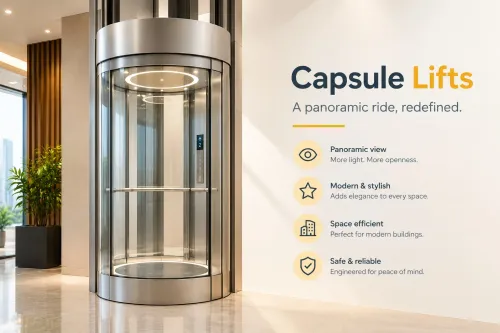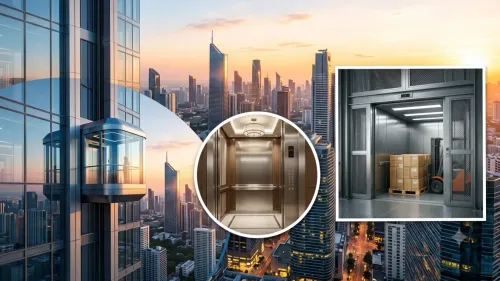
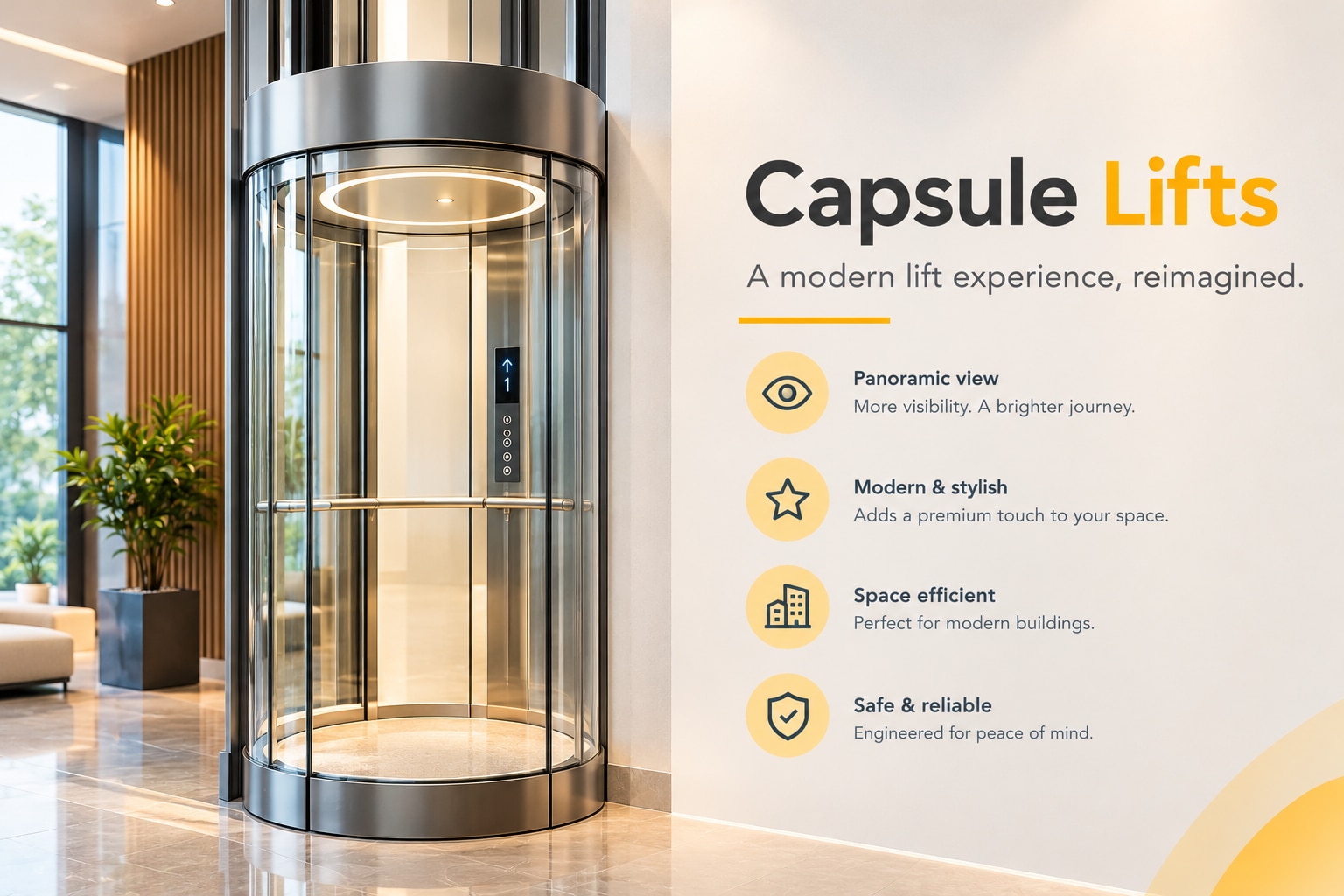
A cracked or shattered capsule-lift pane is not an ordinary window-glass problem: its location, glass build-up, fixing system and effect on lift safety all determine the correct response. By the end, you will know when to isolate the lift, what to demand in a replacement quotation, which hidden faults to inspect and how to prevent repeat cabin damage.
Key takeaways
- Trace the broken panel to its supports before requesting replacement quotes.
- Isolate the lift immediately when glass is cracked, loose or shedding fragments.
- Specify glass, frames, fasteners and cabin movement as one engineered assembly.
- Inspect rollers, guides, fixings and impacts that could have caused the break.
Identify the damaged panel before anyone quotes a replacement
Trace the broken pane to its supports and movement before anyone prices glass: a panel travelling with the car is not the same component as fixed glazing at a floor entrance.
1. Car enclosure: Run the lift only if safe to inspect, then identify the panel fixed to the moving cabin frame. Record its edge channels, clamps, gaskets, thickness and relationship to the car door.
2. Landing entrance: Check whether the pane remains fixed while the car moves away. Inspect the landing-door frame, sill, lock zone and emergency-release area; a replacement must preserve door clearances and locking operation.
3. Shaft enclosure: Follow the panel vertically beside the hoistway. Check its mullions, brackets, retaining stops and any opening toward the shaft. This glazing has different access, retention and protection consequences from a cabin pane.
4. Decorative glazing: Confirm that the glass is a trim panel or façade feature outside the lift’s containment and door systems. Do not assume “decorative” means harmless; loose fragments or displaced trim can still enter the car path.
Ask for lift drawings, panel identification, photographs of both faces and the installer’s glass specification. A generic architectural-glass quotation cannot establish the correct laminated construction, interlayer, edge treatment or fixings for capsule lift glass damage in Surat. Have a lift-and-glazing technician verify the classification before removal.
When cracked or shattered glass requires immediate isolation
Stop the capsule lift immediately if the glass has shattered, has a crack reaching an edge or fixing point, moves in its frame, exposes a sharp edge, or shows delamination that could release fragments.
Keep passengers out, isolate the lift at the controller, and place a clear warning at every landing until a qualified lift technician inspects the panel and its restraints.
Treat these findings as reasons for immediate isolation:
- A through-crack, star crack or missing fragment
- Loose retainers, clamps, gaskets or frame sections
- Glass rubbing against the frame, door or adjacent panel
- Water inside laminated glass, whitening between layers or corrosion at the fixing points
- Damage that obstructs the door, sensor, emergency route or the operator’s view
A safety film can hold loose fragments together, but it cannot restore the pane’s designed load path, edge clearance, interlayer performance or attachment to the cabin structure. Resin fills a chip or surface crack; it does not rebuild broken laminate, remove residual stress or verify resistance to vibration and impact.
Both treatments can hide deterioration and encourage unsafe continued use.
Cosmetic repair is therefore not a release-to-service decision. For capsule lift glass damage in Surat, record the panel location and isolate the lift until the replacement glass, hardware, clearances and door operation have been checked as one assembly. A temporary barrier must not obstruct sensors, reduce cabin clearance or block emergency egress.
Specify the glass and the lift hardware as one engineered assembly
Before ordering replacement glass, identify the panel and its hardware as one engineered lift assembly. A visible width and height cannot reveal the required curvature, edge support or clearance, and an apparently correct pane can bind the door or fail at its fixings.
- Give the supplier the lift make, model and serial number, then identify the panel location: car enclosure, car door, landing entrance, shaft enclosure or decorative glazing.
- Provide a measured drawing showing panel width, height, thickness, radius or curvature, hole positions, notch pattern, corner radii and edge finish.
- State the complete glass build-up, including laminated layers, glass thickness, interlayer type and any coating or tint. Do not substitute ordinary toughened window glass for a specified laminated panel.
- Record the fixing system: clamps, bolts, channels, gaskets, retainers, setting blocks and frame details. Include photographs of every edge and attachment point.
- Require written confirmation that the proposed panel matches the lift manufacturer’s specification, safety-glass designation and required certificates.
- Ask the lift contractor to verify car-door and landing-door clearances, lock operation, emergency unlocking, obstruction detection and levelling after installation.
- Require test travel through every served floor, with checks for vibration and rubbing before the lift returns to service.
A quote for “capsule glass” alone is incomplete. For capsule elevator repair in Surat, compare the stated panel specification, hardware, installation method, testing and certificates—not glass area alone.
Find the fault that caused the cabin panel to break
Technicians must inspect the door, frame, loading path and environment before returning a replacement panel to service. A car-door impact, misadjusted landing-door roller, loose clamp, distorted frame or insufficient edge clearance can transfer force into glass, even when the new pane fits correctly.
| Fault source | Inspection point | Failure it can cause |
|---|---|---|
| Car and landing doors | Check clearances, rollers, guides, locks, emergency unlocking and obstruction detection | Impact, trapping or panel movement |
| Frame and fixings | Check distortion, loose fasteners, clamps, gaskets, buffers and edge clearance | Residual stress and cracked edges |
| Loading zone | Check sill condition, levelling, car movement and contact with trolleys or goods | Point loading during entry |
| Moisture and heat | Inspect lower and side edges, drainage paths, sealants and metal glazing channels | Water ingress, delamination and weakened edge bonds |
A laminated panel can look unbroken while moisture has entered its perimeter or the interlayer has separated. Replace the complete laminated unit when its edge bond has failed; sealing over the visible crack will not restore retention.
After fitting, require test travel through every served floor, door-lock verification, levelling checks and inspection for abnormal vibration. For capsule elevator repair in Surat, use personnel competent in both lift systems and the specific glazing assembly.
A glass lift service in Surat must also complete the required safety and statutory tests, not just fabricate and install the pane.
Build glass checks into maintenance and choose a complete repair scope
Record the glass condition at every capsule lift maintenance in Surat visit, not just the motor and controls. Note cracks, chips, delamination, loose retainers, gasket shrinkage, corrosion, water ingress, door-impact marks, unusual vibration and passenger or trolley impacts. Classify each event as accidental impact, vandalism, water deterioration, installation defect or recurring alignment failure.
A complete maintenance entry should also identify:
- Car-door and landing-door clearances, roller alignment, sill condition, clamps, fasteners, gaskets, buffers and frame distortion.
- Door-lock operation, emergency unlocking, obstruction detection, levelling and test travel through every served floor.
- The lift make, model, serial number, panel location, glass build-up, interlayer, curvature, edge finish, fixing system and certificate references after any replacement.
- Photographs of damage, measurements, test results, corrective work and the date the lift returned to service.
A glass lift service in Surat requires personnel competent in both lift systems and the installed glazing system. The business should be considered only if its scope includes isolation, installation, functional testing and statutory documentation, rather than pane fabrication alone.
Compare quotes against the same deliverables:
| Option | What the quote includes | Accept it when |
|---|---|---|
| Glass-only repair | Pane fabrication and fitting | No frame, door or impact fault exists |
| Complete repair | Glass, hardware, alignment and testing | Damage followed impact, vibration or recurring failure |
| Protection programme | Inspection history, water control and scheduled checks | Exposure or repeat damage threatens future panels |
Frequently asked questions
How do you identify which capsule lift glass panel is damaged?
Trace the pane to its supports and movement. A car panel differs from fixed entrance glazing, so check whether it travels with the lift or remains at the floor.
When should a capsule lift be isolated after glass damage?
Isolate the lift when glass is cracked, shattered, loose, displaced or shedding fragments. Keep passengers away until the panel and surrounding hardware are inspected.
Why specify the glass and lift hardware together?
The replacement must match the frame, fasteners, clearances and cabin movement. Treating the pane as a standalone product can leave an unsafe or incompatible assembly.
What should be checked after a capsule lift glass panel breaks?
Inspect rollers, guides, brackets, fasteners, frame alignment and impact marks to find the fault that caused the break rather than replacing glass alone.
Keywords