A hotel traction manual lift needs a risk-based maintenance plan that covers attendant controls, ropes, brake, doors, safety devices, pit conditions, and emergency communication—not just cleaning and lubrication. By the end, you will have a practical inspection schedule, clear shutdown triggers, a fault-reporting method, and criteria for choosing a competent service contractor.
Key takeaways
- Set service intervals by traffic, duty cycle, age, defects, and manufacturer instructions.
- Inspect ropes, brakes, sheaves, buffers, and levelling at every planned service.
- Keep water, detergent, dust, and monsoon debris away from doors and traction equipment.
- Record faults, corrective work, test results, and shutdown decisions after every visit.
Build a risk-based maintenance schedule around hotel traffic
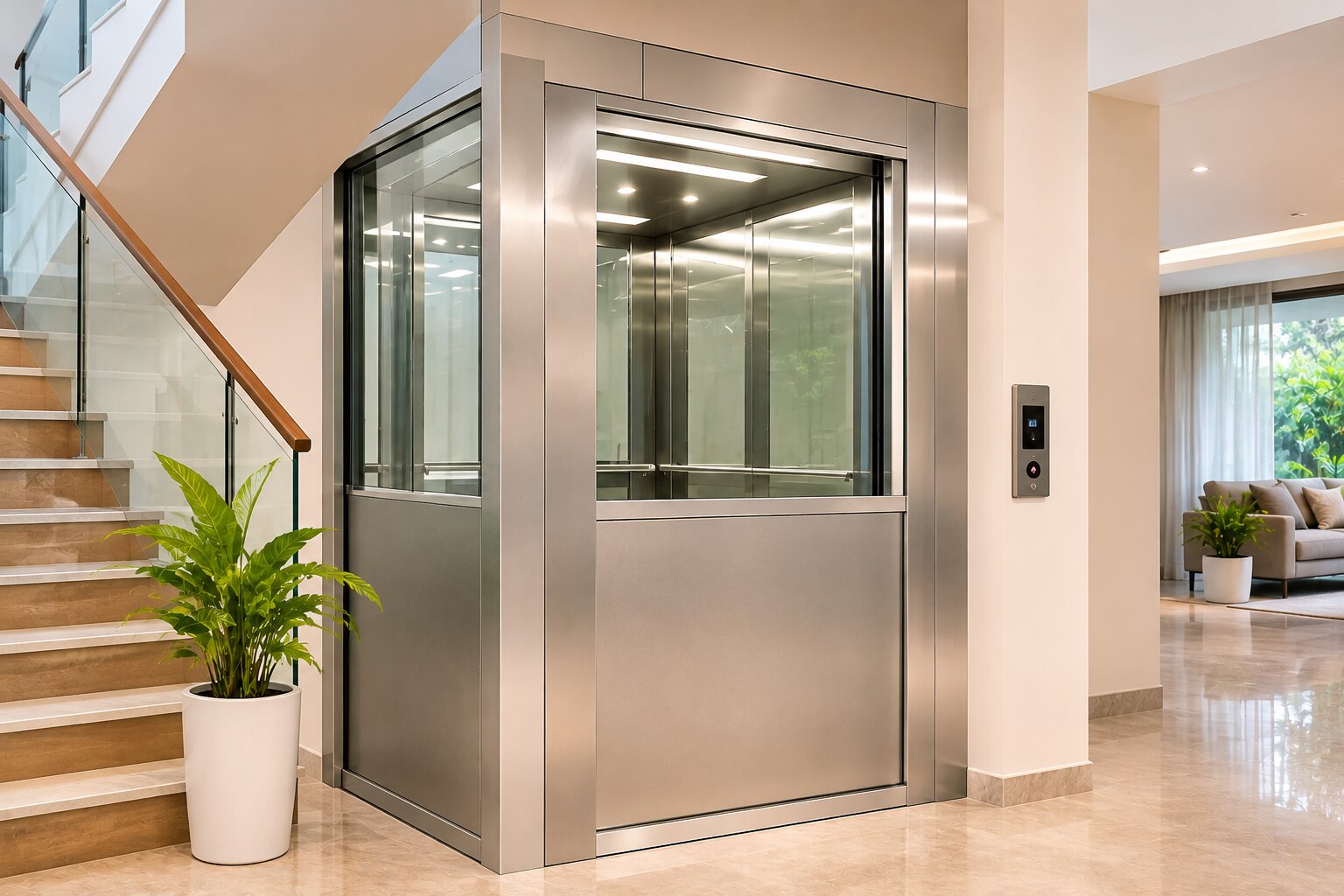
Set each interval from traffic volume, duty cycle, lift age, environment, manufacturer instructions, defect history and statutory requirements. A busy hotel lift serving guest rooms and banquet floors needs tighter checks than a lightly used private lift.
- Daily: Housekeeping staff check the car floor, attendant controller, alarm, emergency light, car gate, landing gates and sill for damage, obstruction, water or lint. Report scraping, burning smells, jerky movement or poor levelling; do not operate with an interlock bypassed.
- Weekly: A trained supervisor observes starts, stops, braking, levelling, gate locking, unusual vibration and attendant controls under normal service. Record every failed call, delayed door and repeat levelling fault.
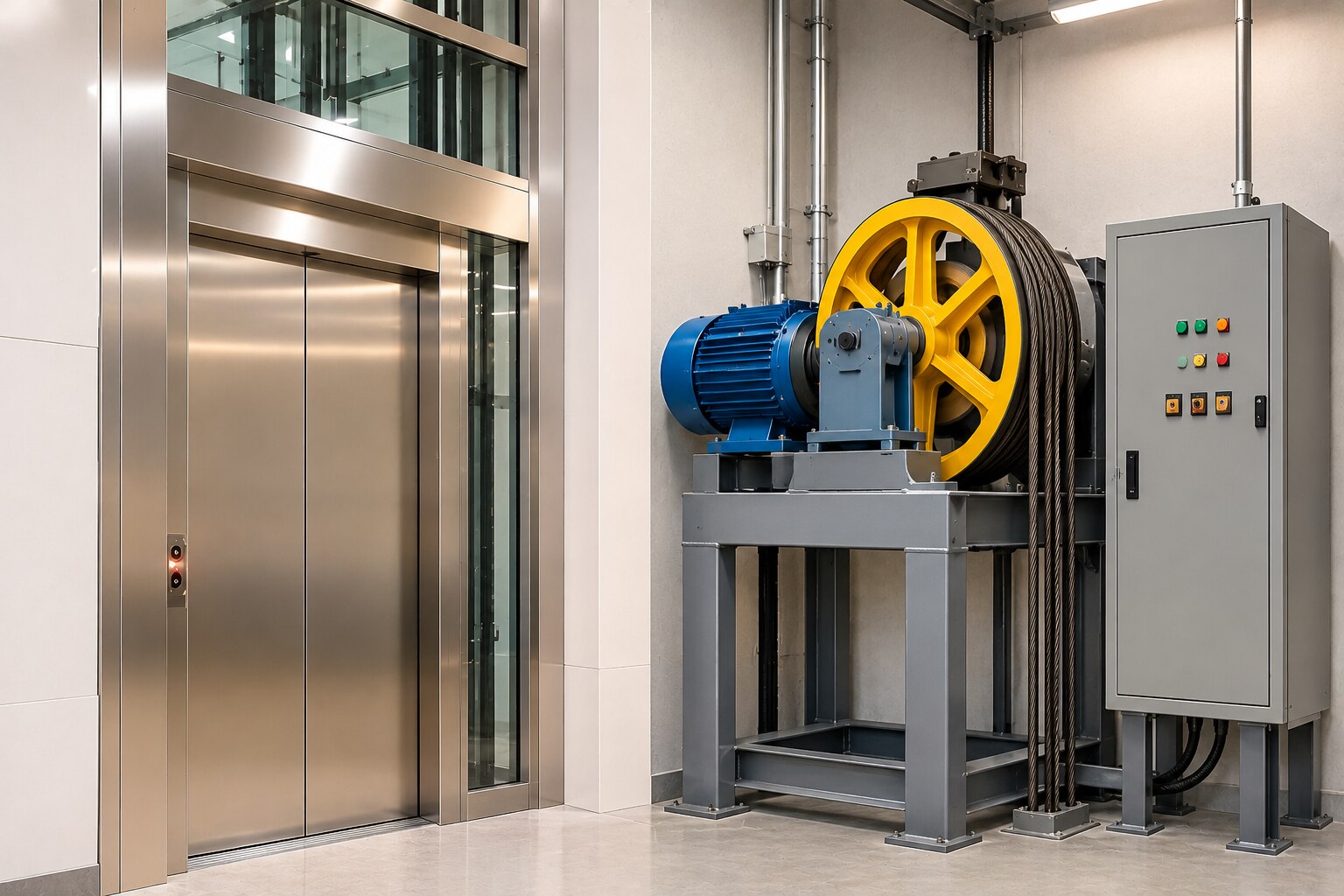
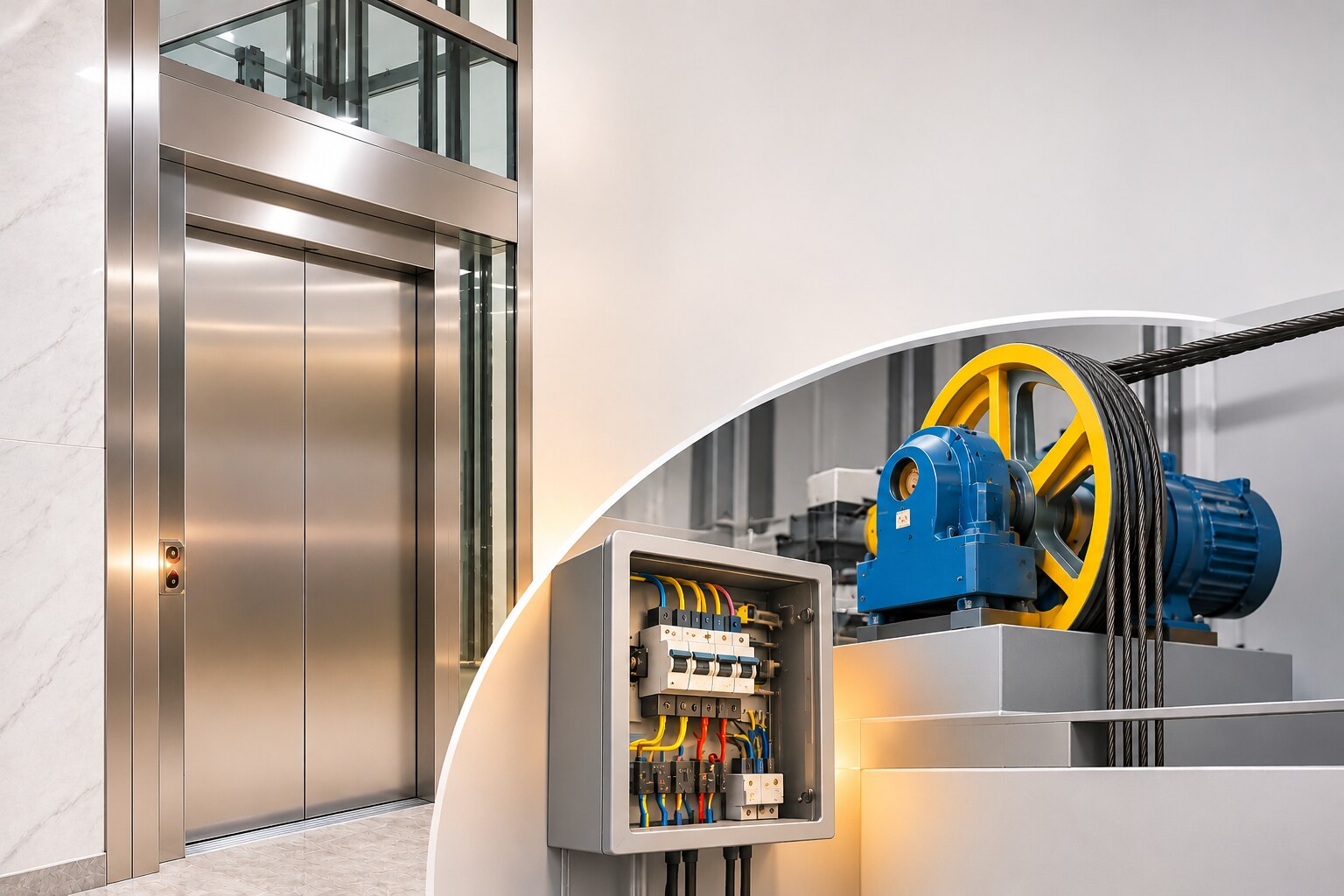
- Monthly: The lift contractor inspects the brake, motor, gearbox or gearless drive, traction sheave, ropes, rope terminations, door operator, guide shoes, limit switches and alarm. Check pit and machine-room water, corrosion and textile dust.
- Quarterly: Test safety-critical systems under the maintenance procedure, including governor, safety gear, buffers, guide rails, counterweight clearances, stopping accuracy and rope condition. Include the automatic rescue device when installed.
- Annually: Arrange the required statutory safety examination and a documented service review. Compare call-backs, measured defects, parts replaced and outstanding restrictions.
For hotel elevator maintenance in Surat, add monsoon inspections after heavy rain: water in the pit or machine room requires controlled isolation and investigation, not routine mopping. The log for traction manual lift maintenance for hotels in Surat must identify the lift, date, tests, findings, corrective action and competent technician.
Inspect the traction system for rope, brake, and levelling defects
A safe manual traction lift depends on separate mechanical and safety systems, not on smooth movement alone. During manual traction lift maintenance, a competent technician must examine each system and record the defect, measurement, corrective action and technician’s name.
| Component | Inspection focus | Defect that requires attention |
|---|---|---|
| Driving machine, brake, sheave and gearbox or gearless drive | Check brake application, release, noise, oil condition, sheave grooves and rope grip | Delayed braking, slipping, burning smell, abnormal vibration or uneven groove wear |
| Wire ropes, rope sockets and counterweight | Inspect for broken wires, corrosion, flattening, diameter loss, bird-caging and uneven tension without handling them unsafely | Rope damage, loose termination or visibly unequal tension |
| Governor, safety gear, guide rails and guide shoes or rollers | Confirm movement, alignment, secure fixings and test results | Sticking governor, damaged guide component or failed safety-gear test |
| Buffers, limit switches and levelling controls | Verify end-of-travel protection and stopping accuracy at every landing | Overrun, harsh stopping or a car that stops above or below the floor |
| Landing gates, car grille, gate locks, door interlocks and attendant controls | Confirm every lock prevents travel when open and controls respond correctly | Any bypassed interlock, failed lock or uncontrolled movement |
Traction elevator care also includes checking repeated reports of jerky starts, levelling errors, delayed stopping and rope noise as recurring faults, not separate call-outs. Do not lubricate over them.
Water in the pit, corrosion, lint or dust around the machine can damage buffers, cables and safety circuits. Isolate the lift and investigate before continued passenger service.
Control doors, gates, cleaning, and monsoon-related contamination
Keep the attendant controller clean, dry, and free of objects that could hold a switch in the run position. During hotel lift servicing, test each attendant control, alarm, stop function, and indicator from the normal operating position; never operate the lift with a bypassed landing-gate lock or door interlock.
Use this checklist for cleaning and contamination control:
- Wipe landing doors, the car gate or grille, and control surfaces with a lightly damp cloth. Do not pour water or spray cleaner into switches, locks, door operators, or controller openings.
- Remove grit, mop water, textile lint, and chemical residue from every door sill with a brush or vacuum. Do not spray lubricant into an interlock; it can mask wear and leave a slippery, unreliable lock.
- Keep the machine room locked, dry, and free of stored linen, cartons, and cleaning chemicals. Arrange dust and lint removal by the lift technician, without using compressed air near electrical parts.
- After heavy monsoon rain, check for dampness, seepage, corrosion, or standing water around the pit entrance and machine room. Do not enter the pit as a housekeeping task.
- If water reaches the pit, isolate the lift through the approved procedure and call the authorised contractor. Water can damage buffers, governor equipment, travelling cables, and safety circuits.
Good traction elevator care includes recording the affected location, visible contamination, time, and action taken. Untrained staff must not release a brake, turn a handwheel, or enter the shaft to free passengers; use the lift’s rescue procedure and contractor escalation route.
Record faults and shut down the lift when safety is uncertain
A fault log must identify the lift, date and time, staff member, operating conditions, passenger load, symptoms, location, and any unusual noise, smell, vibration or levelling error. Record the test performed, measured defect, safety device checked, part replaced, restriction applied, competent person’s name and contractor call-out.
Link repeated door, brake or levelling faults instead of closing each visit as a separate incident.
| Defect found | Immediate action | Record |
|---|---|---|
| Landing gate or car gate fails to close or lock; interlock is bypassed | Isolate the lift and display “Out of service” | Gate, lock, test result and time |
| Car moves unexpectedly, slips, brakes delay or fail to hold | Prevent use and isolate the main supply under the site procedure | Position, load, brake symptom and witness |
| Severe rope damage, governor or safety-gear fault, limit-switch failure or burning smell | Isolate and call the authorised lift contractor | Component, evidence and photographs |
| Water reaches the pit or machine-room equipment | Control access, isolate safely and investigate ingress | Water location, affected equipment and action |
Follow the lift-specific rescue procedure during entrapment: communicate with passengers, isolate the main supply, prevent unintended movement, secure machine-room and shaft access, and escalate to the authorised contractor. Untrained staff must not release the brake, turn the handwheel, move the car, force doors, climb into the shaft or restore power to shorten the response.
This discipline is central to manual traction lift maintenance and hotel elevator maintenance in Surat.
Choose a contractor and maintain a defensible service record
Require a contractor to show authorisation for the installed lift and the work scope, named competent personnel, emergency response arrangements, and access to manufacturer instructions. For traction manual lift maintenance for hotels in Surat, the contract must cover attendant controls, landing-gate locks, car-gate interlocks, brake, ropes, governor, levelling and safety-gear tests—not just lubrication.
Keep a maintenance log, not only invoices. Each entry should identify the lift, date, usage or running hours when available, work and tests completed, measured defects, parts replaced, safety devices tested, restrictions left in force, and the competent person’s name.
Track repeated levelling errors, door faults and brake noise as recurring defects; closing each call-back separately can hide a developing failure.
Use this distinction when checking the contractor’s paperwork:
| Type | What it proves | What you retain |
|---|---|---|
| Preventive service | Planned inspection, adjustment and repair | Signed log, measurements, parts record |
| Emergency call-out | Fault response and return-to-service decision | Fault report, isolation and release details |
| Statutory examination | Inspection or testing required by the applicable Gujarat lift authority | Current licence or certificate, test report and notices |
A service visit does not replace statutory examination, certification or renewal obligations. Ask the contractor to support the examination, correct listed defects, and provide the current approval before operation continues.
Before renewal, obtain written inclusions for rope inspection, brake and governor testing, pit and machine-room cleaning, interlock checks, call-outs, consumables, statutory-test support and obsolete-control replacement. Shivangi Enterprises should be assessed against the same documented scope, response times and records as any other bidder.
Related product
 | Traction Manual Lift Shivangi Enterprises – High-Performance Traction Manual Elevators Product Overview At Shivangi Enterprises, we specialize in designing and... View product → |
Frequently asked questions
How should a Surat hotel set its lift maintenance schedule?
Base intervals on passenger traffic, duty cycle, lift age, operating environment, defect history, manufacturer instructions, and statutory requirements. A busy guest-room or banquet lift needs tighter checks than a lightly used private lift.
What traction components need inspection during hotel lift servicing?
Inspect the suspension ropes, rope terminations, sheave grooves, traction machine, brake operation, overspeed governor, buffers, and car levelling. Investigate rope wear, brake slip, unusual noise, vibration, and inaccurate floor stops.
How can hotels prevent door and monsoon-related lift faults?
Keep landing sills, door tracks, gates, and thresholds free of dust, detergent residue, linen fibres, and water. Prevent rainwater from entering the shaft or machine area, and investigate contamination after heavy monsoon weather.
When should a hotel shut down a manual traction lift?
Remove the lift from service when safety equipment fails, the brake slips, ropes show serious damage, doors do not lock, levelling becomes unsafe, water reaches electrical equipment, or the fault cannot be verified as safe.
What records should a hotel keep for lift maintenance?
Keep dated service reports, fault descriptions, photographs, test results, parts replaced, technician details, shutdown and restart times, inspection certificates, and evidence that corrective actions were completed.
Keywords